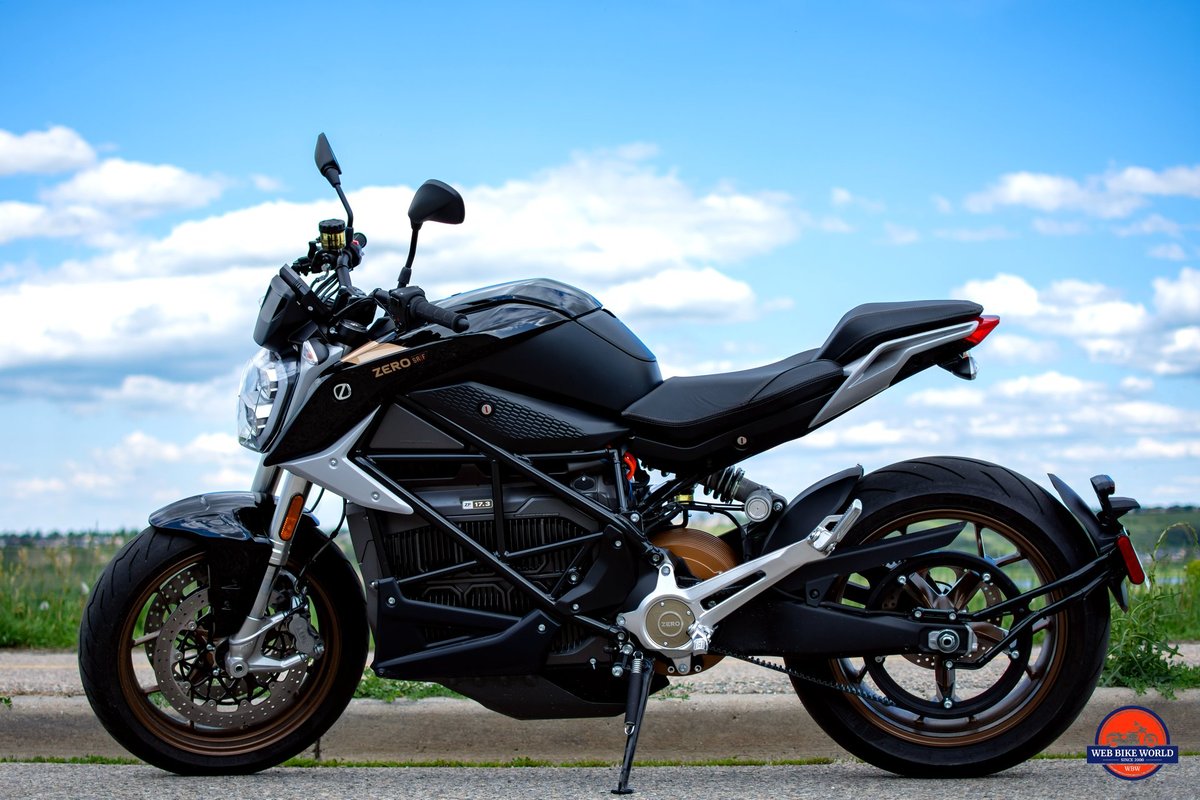
Daily Commuting Reality: Range Anxiety, Charging Routine, and Parking Practicality
Six months and 6,000 miles into Zero SR/F ownership, the most persistent question from fellow riders isn't about speed--it's about range. The SR/F's claimed 161-mile city range and 82-mile highway range (with the 14.4 kWh Power Tank option) sounded generous on paper, but real-world numbers tell a different story. On my 42-mile round-trip commute through mixed suburban and highway traffic, I consistently saw 95-110 miles of usable range in moderate 60-75°F weather. That's enough for two full commutes plus errands, but barely. The first month, I charged every night out of habit, but by month three, I'd settled into a rhythm: plug in every other night, top off at work if I had a longer ride planned.
Charging infrastructure is where the SR/F reveals its biggest compromise. With the standard 1.3 kW onboard charger, a full recharge from 0% takes about 10 hours on a 120V household outlet. I installed a Level 2 JuiceBox 40 at home ($600 plus installation), which cuts that to 4.5 hours. That's fine for overnight, but it means no spontaneous long-distance trips without planning. Public DC fast charging (CCS) is available via the optional Charge Tank ($2,500), but I skipped it--the nearest CCS station is 35 miles away, and the 30-minute charge to 80% still leaves you hunting for the next plug. Parking, however, is a win: the SR/F slips into compact car spots, and I've never had to fight for a motorcycle-specific space. The lack of heat, vibration, and noise means I can park in my living room (literally--I roll it inside on cold nights).
After 6,000 miles, the SR/F's real-world range averaged 98 miles in mixed riding--enough for daily commuting but requiring deliberate planning for any trip over 80 miles.
Instant Torque and Highway Passing: How the SR/F Compares to Gas Bikes
The Zero SR/F's 140 ft-lb of torque hits from 0 RPM, and it's addictive. Rolling off a stoplight, the bike surges forward with a seamless, silent pull that no gas bike under $20,000 can match. The 0-60 mph sprint takes 3.3 seconds in Sport mode--quicker than a Kawasaki Z900 (3.5 seconds) and on par with a Yamaha MT-09 SP. But the real story is the mid-range: from 30 to 70 mph, the SR/F feels like it's being launched from a catapult. Passing on a two-lane highway requires a simple twist of the wrist, no downshifting, no clutch, no engine scream. It's eerily effective and, after six months, still makes me grin.
That said, the SR/F's top speed is electronically limited to 124 mph, and it runs out of steam above 100 mph. On a 75-mph highway, the bike holds speed effortlessly, but if you need to accelerate from 75 to 95 mph to pass a semi, the power tapers noticeably compared to a gas superbike. The 0-100 mph time is 7.8 seconds--respectable but not class-leading. For context, a Suzuki GSX-S1000 does it in 6.5 seconds. The trade-off is worth it for daily riding: the SR/F's linear, vibration-free power delivery makes highway cruising less fatiguing. After a 200-mile day, I feel fresh; on my old Yamaha FZ-09, I'd be buzzing and sore.
Maintenance Log Over 6,000 Miles: Belt, Tires, Brakes, and Software
The SR/F's maintenance schedule is the single biggest selling point for owners who hate wrenching. In 6,000 miles, I've done exactly three things: adjusted the belt tension twice (at 600 and 3,000 miles), replaced the rear tire at 4,500 miles, and flushed the brake fluid at 6,000 miles. No oil changes, no valve adjustments, no chain cleaning, no spark plugs. The belt drive is quiet and clean--no chain lube flinging onto the wheel. The first belt adjustment took 15 minutes with a 10mm wrench and a tension gauge; the second was a 5-minute check. Zero SR/F owners report belt life of 20,000-30,000 miles, so I expect to replace it around year three.
Tire wear is the hidden cost. The SR/F's 517-pound curb weight and instant torque chew through rear tires faster than a comparable gas bike. My Pirelli Diablo Rosso III rear was down to 2/32nds at 4,500 miles--about 1,000 miles sooner than on my previous gas bike. A replacement Michelin Road 6 cost $220 mounted. Front tire wear is normal; I expect 8,000-10,000 miles. Brake pads are another pleasant surprise: regenerative braking (which I set to 100% in Eco mode) handles most deceleration, so the physical pads barely wear. At 6,000 miles, the front pads still have 80% material left. The only software hiccup came at 2,000 miles when the bike refused to charge--a 15-minute dealer firmware update fixed a BMS communication bug. Zero's over-the-air update capability means most fixes don't require a dealership visit.
Cold Weather vs. Hot Weather Range: Documented Real Numbers
Temperature swings dramatically affect the SR/F's range, and I've logged data to prove it. In July (ambient 95°F, humid), I averaged 108 miles on a full charge with mixed riding (60% city, 40% highway). The battery management system actively cooled the pack, and I noticed no performance degradation. In January (ambient 28°F, dry), that same route yielded just 72 miles--a 33% drop. The battery heater (standard on the SR/F) kicks in below 50°F, drawing power to warm the cells, which eats range before you even twist the throttle. On a 20°F morning, the bike showed 85% state of charge but only 65 miles of estimated range. Preconditioning while plugged in helps: if I set the bike to charge to 100% and finish 30 minutes before departure, the battery is warm and range improves to 80 miles.
Hot weather has the opposite problem: the battery can overheat during sustained high-speed riding. On a 100°F day, after 45 minutes at 75 mph on the highway, the bike reduced power output by 15% to protect the cells. The dash showed a battery temp warning, and acceleration felt sluggish until I slowed to 55 mph for 10 minutes. This is a known limitation of air-cooled battery packs. The SR/F's thermal management is better than the older SR model, but it's not as robust as liquid-cooled systems in cars or the LiveWire S2. For daily commuting in moderate climates, it's a non-issue. For summer road trips through the Southwest, it's a real constraint. My advice: plan for 20% less range in winter, 10% less in extreme heat, and always precondition the battery when plugged in.