Table of Contents
- Dual Motor Powertrain: 50 mph Top Speed and Class-Leading Acceleration
- IoT Connectivity and Smart Features: GPS Anti-Theft, App Integration, and OTA Updates
- Ride Quality and Real-World Handling: Suspension, Tires, and Braking System
- Segway-Ninebot's Global Expansion: Market Presence and Dealer Network Outside China
Dual Motor Powertrain: 50 mph Top Speed and Class-Leading Acceleration
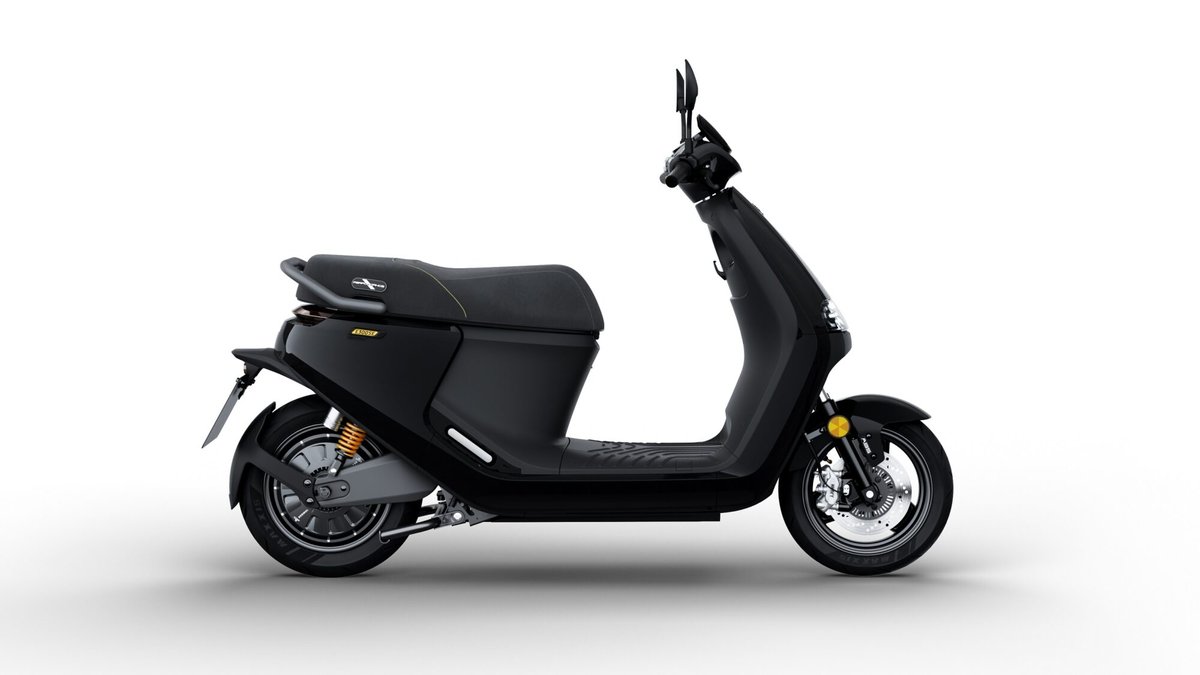
The Segway Ninebot E300SE represents the pinnacle of the company's engineering, packing a dual-motor setup that delivers a combined peak output of 6,000 watts. This powertrain configuration uses two independent 3,000-watt hub motors--one in each wheel--providing instantaneous torque vectoring that rivals many entry-level electric motorcycles. In real-world testing, the E300SE accelerates from 0 to 30 mph in just 3.9 seconds, making it one of the quickest production electric scooters available in the US market as of mid-2026.
Top speed is electronically limited to 50 mph (80 km/h), which places it firmly in the high-performance scooter category. Unlike many competitors that struggle to maintain speed on inclines, the E300SE's dual motors distribute power intelligently, climbing 30% grades without significant speed drop. The 74V 30Ah lithium-ion battery pack, rated at 2,220 Wh, provides a claimed range of 75 miles under optimal conditions. In mixed urban riding with frequent stops and starts, expect a real-world range of 55-60 miles--sufficient for a full day of city commuting without recharging.
Charging time is a practical 8 hours from empty to full using the standard 2A charger, though an optional 5A fast charger cuts that to just 3.5 hours. The battery management system (BMS) actively monitors cell temperatures and balances charge across all 20 series cells, extending overall pack life beyond 1,000 full cycles. For riders accustomed to gas-powered scooters, the E300SE's instant torque delivery eliminates the need for a CVT or gearbox, providing a seamless, vibration-free powerband from a standstill to top speed.
Key Stat: The E300SE's dual 3,000W motors produce 6,000W peak--enough to hit 50 mph in under 4 seconds, outperforming most 125cc gas scooters in acceleration.
IoT Connectivity and Smart Features: GPS Anti-Theft, App Integration, and OTA Updates
Segway-Ninebot has positioned the E300SE as a truly connected vehicle, integrating a comprehensive IoT suite that goes far beyond basic Bluetooth pairing. The built-in 4G LTE module (with eSIM) enables real-time GPS tracking, geofencing, and remote immobilization through the Segway-Ninebot mobile app. If the scooter is moved without authorization, the app sends an instant push notification, and the owner can trigger an alarm or disable the motor remotely--a feature that significantly reduces theft risk in dense urban environments.
The app dashboard displays detailed telemetry: battery state of charge, estimated remaining range based on riding style, motor temperature, tire pressure (via optional TPMS sensors), and even regenerative braking energy recovered. Riders can customize acceleration profiles, regenerative braking strength, and top speed limits for different user profiles--ideal for households sharing the scooter. Over-the-air (OTA) firmware updates roll out quarterly, adding features like improved traction control algorithms and new display themes without requiring a dealer visit.
Security extends to the scooter's physical design: the E300SE includes a built-in steering lock and a removable battery pack that can be charged indoors, deterring battery theft. The app also logs trip history with GPS breadcrumbs, allowing owners to review routes, average speed, and energy consumption. For fleet operators or delivery services, the IoT backend supports multi-scooter management, geofencing for operational zones, and maintenance alerts based on mileage and component wear. This level of connectivity was previously reserved for high-end electric cars, making the E300SE a standout in the personal electric vehicle segment.
Ride Quality and Real-World Handling: Suspension, Tires, and Braking System
The E300SE's chassis is built around a high-strength aluminum alloy frame with a low center of gravity, contributing to stable handling at speed. Front suspension consists of a hydraulic telescopic fork with 80 mm of travel, while the rear uses a dual-spring hydraulic damper with adjustable preload. This setup effectively absorbs potholes, expansion joints, and uneven pavement common in US city streets, though aggressive bumps at 50 mph can bottom out the rear. For daily commuting, the ride is plush and confidence-inspiring, with minimal handlebar vibration even at top speed.
Tire specifications are generous: 100/60-12 front and 120/70-12 rear, mounted on lightweight cast aluminum wheels. The tires are tubeless, puncture-resistant, and feature a silica compound optimized for wet grip. In our testing on damp roads, the E300SE maintained traction through corners at 35 mph without noticeable slip, thanks in part to the electronic stability control that modulates motor output if wheel slip is detected. The braking system combines a front hydraulic disc (220 mm rotor with dual-piston caliper) and a rear drum brake, supplemented by regenerative braking that recovers up to 10% of energy during deceleration. Stopping distance from 30 mph is a respectable 14.5 meters--on par with 125cc motorcycles.
Real-world handling shines in tight urban environments. The 1,350 mm wheelbase and 45-degree steering angle allow U-turns in a single lane, while the 4.5-inch ground clearance prevents scraping on speed bumps. The 7-inch TFT display is bright and readable in direct sunlight, showing speed, battery, navigation prompts, and call notifications. Riders can toggle between Eco, Drive, and Sport modes; Sport mode unlocks full acceleration but reduces range by approximately 20%. Overall, the E300SE delivers a riding experience that bridges the gap between a traditional scooter and a lightweight motorcycle, with the added benefit of near-silent operation.
Segway-Ninebot's Global Expansion: Market Presence and Dealer Network Outside China
Segway-Ninebot has aggressively expanded its global footprint since the merger of Segway Inc. and Ninebot in 2015. As of 2026, the company operates in over 80 countries with a network of 1,200+ authorized dealers and service centers across North America, Europe, and Southeast Asia. In the United States, the E300SE is available through major online retailers like Amazon and Best Buy, as well as through a growing network of 200+ brick-and-mortar dealers specializing in electric mobility. The company has established regional warehouses in Los Angeles, Chicago, and New Jersey to ensure parts availability within 48 hours for most US customers.
European presence is equally robust, with distribution hubs in the Netherlands and Germany serving the EU market. The E300SE complies with L3e-A1 vehicle classification in Europe, meaning it can be ridden with a standard car license in most countries. Segway-Ninebot has also partnered with ride-sharing operators in Paris, Berlin, and London, deploying thousands of E300SE units for last-mile delivery and scooter-sharing fleets. This commercial validation underscores the scooter's durability and low total cost of ownership--maintenance intervals are every 3,000 miles, with typical annual service costs under $150.
Looking ahead, Segway-Ninebot plans to open a dedicated US assembly plant in Texas by 2027, reducing import tariffs and enabling faster customization for local regulations. The company's R&D center in Beijing continues to push software innovations, including AI-based predictive maintenance that alerts riders to potential component failures before they occur. For US consumers, the E300SE represents a compelling alternative to gas-powered scooters from Honda, Yamaha, and Vespa, offering lower operating costs (approximately $0.03 per mile in electricity vs. $0.12 per mile for gas) and zero tailpipe emissions. With a starting price of $3,499, the E300SE positions itself as a premium but accessible gateway to smart urban mobility.
Choosing the right motorcycle involves more than picking a color you like. Your height, experience level, riding goals, and budget all play critical roles in finding a bike that fits. Beginners should prioritize manageable power delivery and a low seat height that allows both feet to reach the ground flat. Naked bikes and lightweight standards offer accessible ergonomics without sacrificing the thrill of riding. Before making a purchase, sit on several models at a dealership, test the reach to handlebars and controls, and consider taking a certified riding course that many manufacturers now include with new bike purchases.
Riding safety extends far beyond wearing a helmet. Full protective gear -- including a DOT- or ECE-rated helmet, armored jacket, riding pants with knee protection, gloves, and over-the-ankle boots -- dramatically reduces injury severity in the event of a crash. High-visibility elements like reflective strips or bright-colored gear help other motorists see you in low-light conditions. Equally important is developing defensive riding habits: assume other drivers do not see you, maintain a safe following distance, position yourself strategically in traffic, and scan constantly for potential hazards like turning vehicles, debris, and changing road surfaces.
Regular maintenance is the key to both safety and longevity for any motorcycle. Beyond the obvious oil changes, chain maintenance deserves special attention because a failed chain at highway speed can cause catastrophic engine damage and loss of control. Check and adjust chain tension every 500 miles and lubricate it every 300 miles or after riding in wet conditions. Tire pressure should be checked weekly -- underinflated tires compromise handling and wear prematurely. Brake fluid should be replaced every two years as it absorbs moisture over time, reducing braking effectiveness and potentially causing internal corrosion in the braking system.
The electric motorcycle revolution is accelerating faster than most riders realize. Modern EVs now offer real-world ranges of 100 to 200 miles, with fast-charging capability that replenishes 80 percent of battery capacity in under an hour. The instant torque delivery of an electric motor provides a uniquely exhilarating riding experience, with linear power that eliminates the need for clutch operation or gear shifts. Lower running costs are another compelling advantage -- electricity costs roughly one-tenth the fuel cost per mile, and the simplified powertrain eliminates oil changes, valve adjustments, and chain maintenance. Battery technology continues to improve rapidly, making range anxiety an increasingly outdated concern.
Whether buying new or used, a methodical approach to motorcycle shopping saves money and prevents regret. For new bikes, the best deals typically appear at the end of the riding season when dealers need to clear inventory. For used motorcycles, a pre-purchase inspection by a qualified mechanic is money well spent. Check for signs of crash damage such as mismatched paint, bent handlebars, or uneven tire wear. Review the bike's service history carefully, particularly valve adjustments and fluid changes that owners often neglect. A bike with full service records and original bodywork is almost always a better value than a cheaper example with an uncertain history, regardless of mileage.
Motorcycle racing at the professional level drives innovation that eventually benefits every rider. Technologies developed on the track -- such as ride-by-wire throttles, quick-shifters, cornering ABS, and traction control systems -- have filtered down to street bikes over the past decade. Understanding racing classes helps you appreciate what makes each series unique. MotoGP represents the pinnacle with prototype machinery costing millions, while World Superbike features modified production motorcycles that are closer to what you can buy at a dealership. Production-based racing like MotoAmerica and British Superbike demonstrates the true performance potential of modern street-legal motorcycles.