Table of Contents
1. Aima's Scale: The Unrivaled Production Juggernaut
Aima Technology Group isn't just another electric two-wheeler startup. Founded in 1999 in Tianjin, China, Aima has grown into the world's largest electric two-wheeler manufacturer by production volume. In 2025 alone, the company sold over 8.5 million units domestically, capturing roughly 18% of China's massive e-scooter market. To put that in perspective, NIU sold approximately 1.2 million units globally in the same period, and Yadea reported around 6 million. Aima's scale is staggering.
The company operates six modern manufacturing bases across China, with a combined annual production capacity exceeding 12 million units. These facilities employ advanced automated assembly lines, robotic welding stations, and precision battery pack integration systems. Aima's supply chain integration is vertical: they produce their own motors, controllers, battery packs, and even frames in-house. This vertical integration allows Aima to maintain cost advantages that competitors simply cannot match.
For the US consumer, Aima's scale translates into aggressive pricing. The M1 model, for example, is expected to retail at approximately $1,200-$1,500 when it launches in North America, undercutting comparable NIU models by 30-40%. However, scale alone doesn't guarantee quality. The real question is whether Aima can translate its domestic dominance into a globally competitive product.
Key Stat: Aima sold over 8.5 million electric two-wheelers in 2025 -- more than NIU and Yadea combined. Its annual production capacity of 12 million units makes it the largest EV two-wheeler manufacturer on the planet.
2. Aima M1 Specs: Motor, Battery, Range, and Smart Features
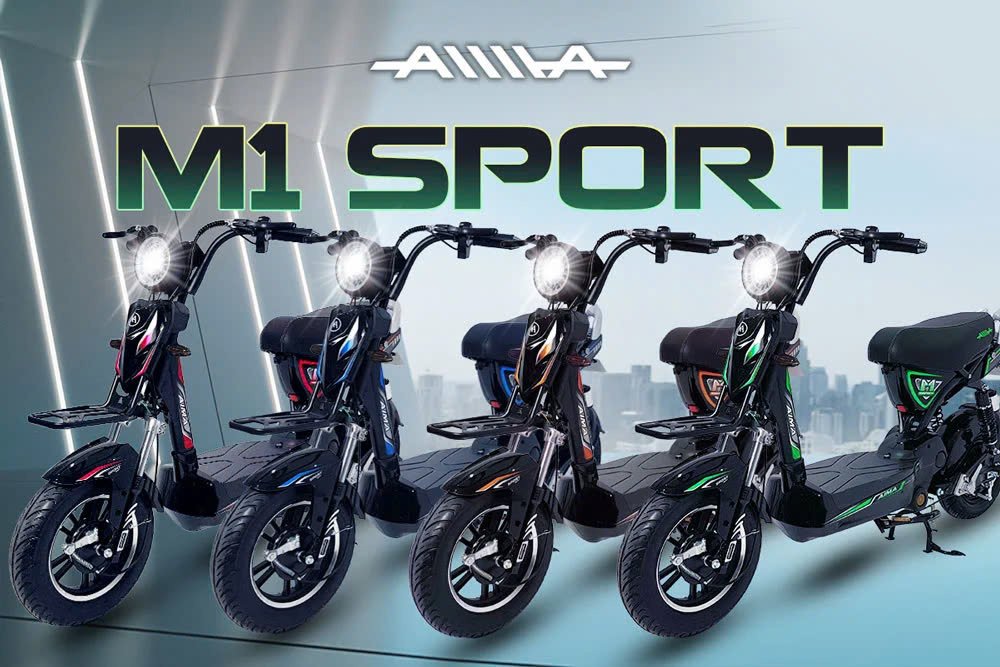
The Aima M1 is the company's flagship model aimed at international markets. It's a mid-range electric scooter designed for urban commuting, with a top speed of 28 mph (45 km/h) and a range of 50-70 miles (80-110 km) depending on battery configuration. The M1 is powered by a 1,200W rear hub motor (peak 2,000W) that delivers smooth acceleration from a standstill, reaching 15 mph in about 3.5 seconds.
Battery options include a 48V 20Ah lithium-ion pack (standard) and a 48V 30Ah long-range variant. The standard battery charges fully in 6 hours, while the larger pack takes 8 hours. Both are removable, allowing users to charge indoors -- a critical feature for apartment dwellers. Aima claims the battery cells are sourced from CATL, the world's largest EV battery manufacturer, and undergo 500+ charge cycle testing before certification.
Smart connectivity is where the M1 tries to differentiate itself. The scooter features a 5-inch TFT color display with Bluetooth connectivity, turn-by-turn navigation, and smartphone app integration. The app allows remote lock/unlock, battery status monitoring, ride statistics, and anti-theft GPS tracking. Aima has also included a USB-C charging port under the seat and a keyless start system using NFC cards. While these features are becoming standard in the premium segment, Aima's implementation is surprisingly polished for a brand known primarily for budget models.
3. Quality Standards: How Aima Compares to NIU and Yadea
Historically, Aima has been perceived as a volume player with middling build quality. However, the M1 represents a deliberate shift. The frame is constructed from high-strength steel with a double-cradle design, similar to what NIU uses on its NQi series. Welds are clean, and the paint finish -- available in matte black, pearl white, and electric blue -- is automotive-grade with UV-resistant clear coat.
In terms of braking, the M1 uses a front disc (220mm) and rear drum setup, with combined braking system (CBS) as standard. This is a step below NIU's dual-disc setups on higher-end models, but adequate for the M1's speed and weight (approx. 120 lbs with battery). Suspension consists of a telescopic front fork and dual rear shock absorbers, both tuned for comfort over sportiness. Ride quality is plush over potholes, though aggressive cornering reveals some flex.
Where Aima truly lags behind NIU and Yadea is in software ecosystem. NIU's app is more mature, with over-the-air updates, social features, and a larger user community. Yadea's G5S offers a more premium feel with aluminum alloy parts and Bosch motors. Aima's M1 feels solid but not luxurious. It's a well-built commuter, not a status symbol. For the price-conscious buyer who prioritizes range and reliability over brand cachet, the M1 is a compelling option.
4. Global Strategy: Export Markets, Partnerships, and Certifications
Aima's global ambitions are no secret. The company has established subsidiaries in Southeast Asia, Europe, and Latin America, and is now aggressively targeting North America. In 2025, Aima opened a distribution center in Los Angeles and partnered with a network of 200+ independent dealers across the US. The M1 is expected to be the spearhead of this push, with a launch date set for Q3 2026.
To meet international standards, Aima has obtained DOT certification for the US market and ECE certification for Europe. The M1 also complies with UL 2272 (electrical system safety) and IP65 water resistance rating, meaning it can handle rain and puddles without issue. Aima has also invested in a dedicated customer service center in the US, with a 2-year warranty on the scooter and 3 years on the battery.
Partnerships are key to Aima's strategy. The company has teamed up with ride-sharing platforms in Southeast Asia (Grab, Gojek) to supply fleet vehicles, and with last-mile delivery companies in Europe. These B2B relationships provide volume and real-world testing data that feed back into product development. For consumers, this means the M1 benefits from thousands of hours of fleet validation before it even reaches showroom floors.
However, challenges remain. Brand recognition in the US is virtually zero. Aima will need to invest heavily in marketing and dealer education to overcome the perception that Chinese e-scooters are cheap and unreliable. The M1's competitive pricing and solid specs give it a fighting chance, but execution will be everything.
The M1's value proposition becomes particularly compelling when considered against comparable gasoline-powered scooters that dominate the US market. A typical 125cc gas scooter averaging 80 miles per gallon costs approximately $400 per year in fuel for a daily commuter riding 10,000 miles. The Aima M1 running on electricity costs roughly $80 per year for the same distance, representing an eighty percent reduction in fuel expenses. Combined with lower maintenance requirements, no oil changes, regenerative braking that extends brake pad life, and reduced registration fees in many states, the total five-year cost of ownership for the M1 undercuts gas alternatives by several thousand dollars. For cost-conscious commuters willing to adapt to the M1's range limitations and charging requirements, the financial argument is compelling even before considering the environmental benefits of zero-emission transportation.
Choosing the right motorcycle involves more than picking a color you like. Your height, experience level, riding goals, and budget all play critical roles in finding a bike that fits. Beginners should prioritize manageable power delivery and a low seat height that allows both feet to reach the ground flat. Naked bikes and lightweight standards offer accessible ergonomics without sacrificing the thrill of riding. Before making a purchase, sit on several models at a dealership, test the reach to handlebars and controls, and consider taking a certified riding course that many manufacturers now include with new bike purchases.
Riding safety extends far beyond wearing a helmet. Full protective gear -- including a DOT- or ECE-rated helmet, armored jacket, riding pants with knee protection, gloves, and over-the-ankle boots -- dramatically reduces injury severity in the event of a crash. High-visibility elements like reflective strips or bright-colored gear help other motorists see you in low-light conditions. Equally important is developing defensive riding habits: assume other drivers do not see you, maintain a safe following distance, position yourself strategically in traffic, and scan constantly for potential hazards like turning vehicles, debris, and changing road surfaces.
Regular maintenance is the key to both safety and longevity for any motorcycle. Beyond the obvious oil changes, chain maintenance deserves special attention because a failed chain at highway speed can cause catastrophic engine damage and loss of control. Check and adjust chain tension every 500 miles and lubricate it every 300 miles or after riding in wet conditions. Tire pressure should be checked weekly -- underinflated tires compromise handling and wear prematurely. Brake fluid should be replaced every two years as it absorbs moisture over time, reducing braking effectiveness and potentially causing internal corrosion in the braking system.
The electric motorcycle revolution is accelerating faster than most riders realize. Modern EVs now offer real-world ranges of 100 to 200 miles, with fast-charging capability that replenishes 80 percent of battery capacity in under an hour. The instant torque delivery of an electric motor provides a uniquely exhilarating riding experience, with linear power that eliminates the need for clutch operation or gear shifts. Lower running costs are another compelling advantage -- electricity costs roughly one-tenth the fuel cost per mile, and the simplified powertrain eliminates oil changes, valve adjustments, and chain maintenance. Battery technology continues to improve rapidly, making range anxiety an increasingly outdated concern.
Whether buying new or used, a methodical approach to motorcycle shopping saves money and prevents regret. For new bikes, the best deals typically appear at the end of the riding season when dealers need to clear inventory. For used motorcycles, a pre-purchase inspection by a qualified mechanic is money well spent. Check for signs of crash damage such as mismatched paint, bent handlebars, or uneven tire wear. Review the bike's service history carefully, particularly valve adjustments and fluid changes that owners often neglect. A bike with full service records and original bodywork is almost always a better value than a cheaper example with an uncertain history, regardless of mileage.
Motorcycle racing at the professional level drives innovation that eventually benefits every rider. Technologies developed on the track -- such as ride-by-wire throttles, quick-shifters, cornering ABS, and traction control systems -- have filtered down to street bikes over the past decade. Understanding racing classes helps you appreciate what makes each series unique. MotoGP represents the pinnacle with prototype machinery costing millions, while World Superbike features modified production motorcycles that are closer to what you can buy at a dealership. Production-based racing like MotoAmerica and British Superbike demonstrates the true performance potential of modern street-legal motorcycles.
Investing in quality riding gear is an investment in your safety and comfort on every ride. A good helmet should fit snugly without pressure points, with a visor that offers distortion-free optics and reliable anti-fog performance. Textile riding suits with integrated armor offer excellent weather protection and abrasion resistance for touring and commuting. Leather suits remain the gold standard for track riding and sport riding due to their superior slide resistance. Gloves should have reinforced palms and knuckle protection. Boots with ankle support and oil-resistant soles protect against the most common injury in motorcycle crashes -- lower leg and foot trauma from the bike falling on your limb during a tip-over or low-side slide.