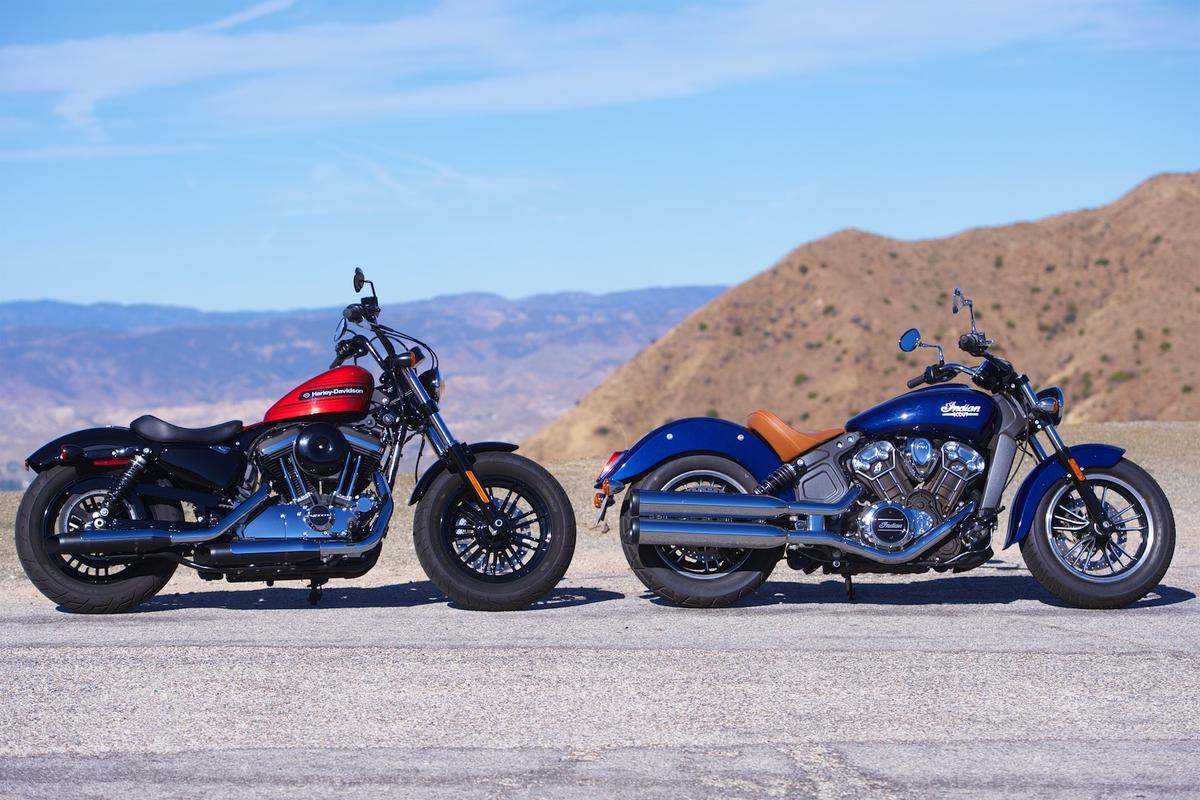
Choosing the right cruiser motorcycle is a deeply personal decision that blends emotion, budget, and riding style. For decades, Harley-Davidson has dominated the American cruiser market, but Indian Motorcycle has clawed back with modern engineering, and Japanese brands like Honda, Yamaha, and Suzuki offer compelling alternatives that often cost less and require fewer trips to the dealer. This head-to-head guide breaks down the key models, engines, prices, and aftermarket ecosystems so you can decide which cruiser fits your life and your garage.
Key Stat: According to Motorcycle Industry Council data, cruisers accounted for 34% of all new motorcycle sales in the U.S. in 2025, with Harley-Davidson holding 48% of that segment, Indian at 18%, and Japanese brands collectively at 27%.
1. Harley-Davidson Lineup: Street Bob, Low Rider, Road Glide
Harley-Davidson's cruiser lineup is vast, but three models define the brand's character: the Street Bob, the Low Rider S, and the Road Glide. The Street Bob (starting at $15,999) is a stripped-down, minimalist bobber powered by the Milwaukee-Eight 107 engine (1,745 cc, 92 hp). It's light, agile, and perfect for urban riders who want a raw, no-frills experience. The 2026 model adds a new high-flow air cleaner and revised suspension for better handling.
The Low Rider S ($18,999) steps up with the Milwaukee-Eight 114 (1,868 cc, 100 hp) and a more aggressive riding position. It features a 43mm inverted fork, dual disc brakes, and a solo seat that screams custom. This bike is built for riders who want performance without losing the classic Harley look. The Low Rider S is a favorite among the club-style crowd and responds well to exhaust and tuning upgrades.
At the top of the touring cruiser range sits the Road Glide ($25,999). Its signature shark-nose fairing houses a 6.5-inch touchscreen with Boom! Box GTS infotainment. The Milwaukee-Eight 117 engine (1,923 cc, 105 hp) delivers effortless highway cruising. The Road Glide's frame-mounted fairing reduces steering weight compared to the batwing-equipped Street Glide, making it a better choice for long-distance riders who value stability. Harley's aftermarket ecosystem is unmatched -- you can build a Road Glide from a catalog of thousands of parts.
2. Indian Motorcycle: Scout, Chief, Challenger -- PowerPlus and Ride Command
Indian Motorcycle has reinvented itself with modern powertrains and technology that often out-spec Harley. The Scout ($11,999) is the entry point, powered by a liquid-cooled 1,133 cc V-twin producing 100 hp. It's lighter and more powerful than the Harley Street Bob, with a 6-speed transmission and a 3.4-gallon fuel tank. The Scout's low seat height (25.6 inches) makes it accessible for shorter riders, and the 2026 model adds a new Scout Rogue variant with a mini-ape hanger and blacked-out styling.
The Chief line (starting at $14,999) uses the Thunderstroke 116 engine (1,890 cc, 122 hp) -- a massive air-cooled V-twin that produces more torque than any Harley Milwaukee-Eight. The Chief Dark Horse ($16,999) strips away chrome for a menacing look, while the Chief Bobber offers a solo seat and 19-inch front wheel. Indian's Ride Command system (standard on Chief and Challenger) includes a 4-inch touchscreen with Bluetooth, turn-by-turn navigation, and vehicle settings. It's more intuitive than Harley's Boom! Box and updates over Wi-Fi.
The Challenger ($23,999) is Indian's bagger flagship, powered by the PowerPlus 108 engine (1,768 cc, 122 hp) -- a liquid-cooled, DOHC V-twin that revs freely and makes the Harley Road Glide feel dated. The Challenger's frame is stiffer, the Brembo brakes are stronger, and the Ride Command system includes a 7-inch display with Apple CarPlay. In independent dyno tests, the PowerPlus engine consistently produces 10-15 more horsepower than the Milwaukee-Eight 117. For riders who want modern performance with classic styling, Indian is the clear winner.
3. Japanese Cruiser Alternatives: Honda Rebel 1100, Yamaha Eluder, Suzuki Boulevard
Japanese cruisers offer proven reliability, lower prices, and often better handling than their American counterparts. The Honda Rebel 1100 ($9,399) is the standout in the entry-to-mid segment. It uses the Africa Twin's 1,084 cc parallel-twin engine (87 hp) with a DCT option ($1,000 extra). The Rebel 1100 is 60 pounds lighter than the Harley Street Bob and handles like a sportbike in the corners. It's the best choice for riders who want a cruiser that can carve canyons without breaking the bank.
The Yamaha Eluder ($17,999) is a touring bagger with the 1,854 cc air-cooled V-twin from the Star Venture. It produces 115 hp and 126 lb-ft of torque, with a 6-speed transmission and cruise control. The Eluder's infotainment system includes a 7-inch touchscreen with navigation, but it lacks the polish of Indian's Ride Command. Yamaha's reliability is legendary -- the Eluder's engine is essentially bulletproof, and maintenance intervals are longer than Harley or Indian.
The Suzuki Boulevard M109R ($13,499) is a power cruiser with a 1,783 cc V-twin that produces 125 hp. It's raw, loud, and looks like a drag bike. The Boulevard's shaft drive eliminates chain maintenance, and the fuel injection is smooth. Suzuki's aftermarket is smaller than Harley's, but you can still find exhaust, intake, and suspension upgrades. For riders who want maximum power per dollar, the M109R is hard to beat.
4. Price Comparison Across Segments: Entry, Mid, and Bagger/Touring
Understanding the price landscape helps you allocate your budget wisely. In the entry segment ($7,000-$10,000), Japanese brands dominate. The Honda Rebel 1100 ($9,399) and Suzuki Boulevard C50 ($8,299) offer reliable V-twins with modern features. Harley's entry-level Street 500 ($7,599) is underpowered and dated -- avoid it unless you find a screaming deal used. Indian's Scout ($11,999) starts above this bracket but offers significantly more performance.
In the mid-range ($12,000-$18,000), the competition heats up. The Harley Street Bob ($15,999) and Low Rider S ($18,999) face the Indian Chief ($14,999) and Chief Dark Horse ($16,999). The Yamaha Eluder ($17,999) slots in here as a touring alternative. At this price, you're paying for brand cachet and aftermarket support with Harley, while Indian gives you more power and technology. The Japanese options offer the best value -- the Honda Rebel 1100 DCT ($10,399) is a steal for what you get.
In the bagger/touring segment ($20,000-$30,000+), the Harley Road Glide ($25,999) and Indian Challenger ($23,999) are the primary contenders. The Road Glide has a deeper aftermarket and stronger resale value, but the Challenger outperforms it in every metric -- horsepower, braking, suspension, and technology. The Yamaha Eluder ($17,999) undercuts both by $6,000-$8,000, making it the smart financial choice for touring riders who don't need the badge.
5. Aftermarket and Custom Culture: Which Brand Has the Deepest Parts Ecosystem?
Aftermarket support is critical for cruiser owners who want to personalize their bikes. Harley-Davidson has the deepest ecosystem by a wide margin. Companies like Vance & Hines, Screamin' Eagle, S&S Cycle, and Roland Sands Design produce thousands of parts for every Harley model. The custom culture is built around Harley -- from the Sturgis rally to local bike nights, you'll find more parts, more builders, and more community support. This ecosystem also means higher resale value for well-modified Harleys.
Indian Motorcycle has grown its aftermarket significantly since Polaris revived the brand. Indian offers genuine accessories through its PowerPlus and Thunderstroke catalogs, and third-party companies like Freedom Performance, Dean Speed, and Klock Werks now produce exhaust, seats, and fairings. However, the selection is still about 60% smaller than Harley's. If you plan to heavily customize, Indian may limit your options -- especially for the Scout and Chief models.
Japanese cruisers have a smaller but dedicated aftermarket. Honda's Rebel 1100 has a growing ecosystem from companies like Two Brothers Racing, Yoshimura, and Mustang Seats. Yamaha's Eluder and Suzuki's Boulevard share parts with other models, so you can find exhaust and suspension upgrades. But the custom culture is less vibrant -- you won't find the same number of builders or events. For riders who want a reliable, affordable cruiser and don't need to change everything, Japanese aftermarket is sufficient.
Ultimately, your choice comes down to priorities. If you want the deepest customization potential and strongest community, buy a Harley. If you want modern performance and technology without sacrificing style, go Indian. If you value reliability, lower cost, and better handling, a Japanese cruiser is the smartest buy. Test ride all three before you decide -- the right cruiser is the one that makes you want to ride every day.