Table of Contents
1. Riding Position Breakdown: Clip-Ons vs Upright Bars
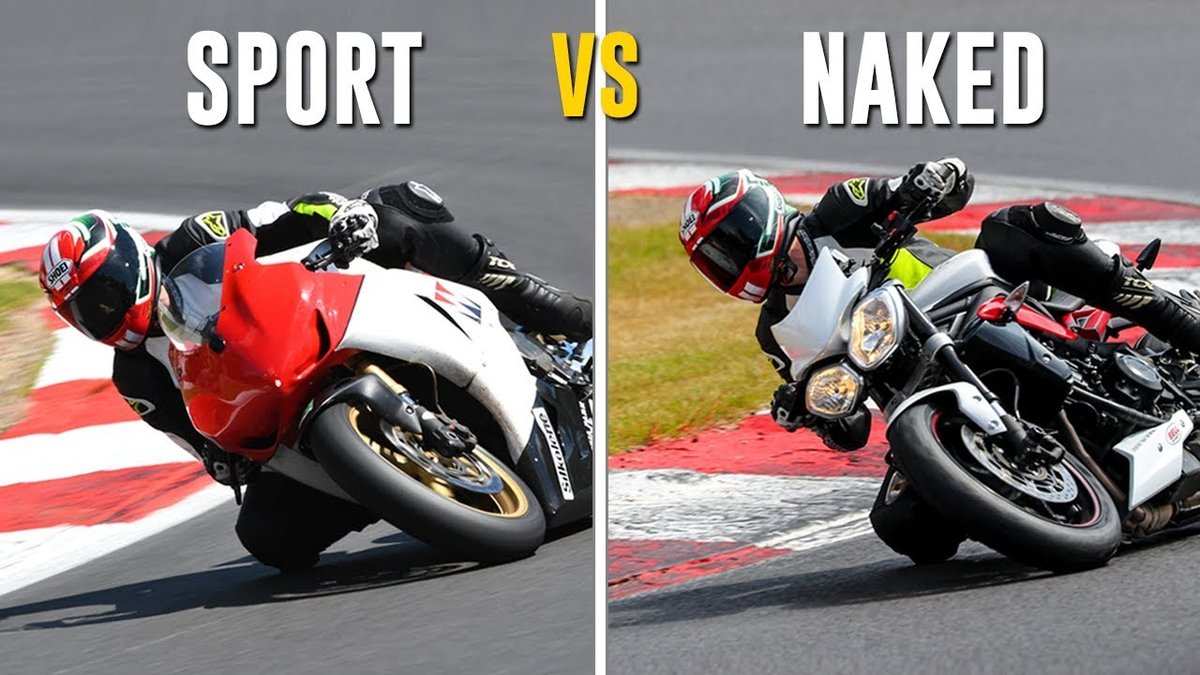
The most immediate difference between a sport bike and a naked bike is how you sit on them. Sport bikes like the Yamaha R7 or Kawasaki ZX-6R feature clip-on handlebars mounted below the triple clamp, forcing your torso forward into a tucked position. Rear-set footpegs place your knees at a sharp angle, creating an aggressive, aerodynamic posture designed for track cornering and high-speed stability. On a 200-mile highway ride, this position transfers significant weight to your wrists and lower back. Many riders report numbness in their hands after 90 minutes in the saddle.
Naked bikes, such as the Yamaha MT-07 or Kawasaki Z900, use a wide, raised handlebar that places your hands at or above seat level. Your torso sits nearly upright, with feet positioned directly below your hips. This neutral spine angle reduces pressure on your wrists and allows you to scan traffic more easily. On a 300-mile day trip, the upright position causes less fatigue, though you may feel more wind blast on your chest at speeds above 70 mph. For daily commuting in stop-and-go traffic, the naked bike's ergonomics win decisively--you can see over car roofs, filter through lanes with better leverage, and avoid the wrist ache that plagues sport bike riders in urban environments.
Key Stat: A 2025 rider survey by Motorcycle Consumer News found that 73% of riders who switched from a sport bike to a naked bike reported significantly less back and wrist pain on rides over 100 miles.
2. Performance Comparison: Same Engine, Different Character
Manufacturers often pair a sport bike and naked bike on the same engine platform, yet the riding experience diverges dramatically. Take the Yamaha R7 and MT-07: both share the 689cc CP2 parallel-twin engine producing 73 horsepower and 50 lb-ft of torque. On the R7, that engine is paired with a slipper clutch, quickshifter (optional), and fully adjustable KYB suspension. The bike feels taut, responsive, and eager to rev--ideal for canyon carving but twitchy in traffic. The MT-07, with its softer suspension settings and upright bars, delivers the same torque curve but with a more forgiving, playful character. You can flick it through city streets without the constant reminder that you're on a track weapon.
The Kawasaki ZX-6R and Z900 offer a starker contrast. The ZX-6R's 636cc inline-four screams to 15,500 rpm, producing 128 horsepower with a narrow powerband that demands constant gear changes. It's a focused machine for riders who live for apex clipping. The Z900, by contrast, uses a 948cc inline-four tuned for mid-range punch--123 horsepower but with a flat torque curve from 4,000 rpm. You can roll on the throttle in sixth gear at 50 mph and accelerate without downshifting. For daily riding, the Z900's broader power delivery makes it more usable, while the ZX-6R rewards riders who chase lap times. Insurance costs reflect this: the ZX-6R typically costs 40% more to insure than the Z900, according to 2026 Progressive rate data.
3. Wind Protection: Fairing vs Buffeting
At highway speeds, wind protection becomes a major comfort factor. Sport bikes come with full fairings that channel air around your body. On the Kawasaki ZX-6R, the windscreen and side fairings reduce chest pressure by roughly 60% compared to a naked bike at 75 mph, based on wind tunnel data from Motorcyclist magazine. This allows you to ride for hours with less fatigue, especially in cold weather. The trade-off is heat management--fairings trap engine heat, making summer stop-and-go riding uncomfortable.
Naked bikes offer minimal wind protection. At 70 mph, you'll feel constant pressure on your chest and shoulders, which can cause neck strain over long distances. Aftermarket windscreens, such as the Puig Touring Screen for the MT-07 ($89.95), can reduce buffeting by 30-40%, but they never match the protection of a full fairing. Some naked bikes, like the BMW S1000R, offer optional small screens, but they're primarily aesthetic. For riders who split time between city commutes and weekend highway trips, a naked bike with a medium touring screen strikes a practical balance--you get upright comfort in town and manageable wind protection on the freeway.
4. Insurance Cost Difference: Sport Bikes Cost 30-50% More
Insurance premiums reflect risk, and sport bikes are statistically riskier. According to 2026 data from the Insurance Institute for Highway Safety, sport bikes are involved in 40% more claims per 1,000 registered vehicles than naked bikes. This translates directly to your wallet. A 30-year-old rider with a clean record in California can expect to pay approximately $1,800 per year for full coverage on a Kawasaki ZX-6R, versus $1,100 for a Z900--a 39% difference. For the Yamaha R7 vs MT-07, the gap is narrower but still significant: $1,400 vs $1,050 annually.
Why the disparity? Insurers classify sport bikes as high-performance vehicles with higher theft rates and more severe accident costs. Naked bikes, despite similar horsepower, are seen as less likely to be ridden aggressively. You can reduce costs by taking an MSF course, bundling policies, or installing anti-theft devices. But the structural difference remains: if insurance cost is a primary concern, a naked bike will save you $300-$700 per year. For a rider on a budget, that's money that could fund gear upgrades, track days, or a year's worth of fuel.
5. Versatility Ranking: Which Naked Bikes Offer Touring Features
Modern naked bikes increasingly blur the line between sport and touring. The 2026 Yamaha MT-09 SP comes standard with cruise control, a quickshifter, and a comfort seat that rivals many adventure bikes. The Kawasaki Z900 SE offers a similar package, including a TFT display with smartphone connectivity and optional heated grips. These features make naked bikes surprisingly capable for multi-day trips. The MT-09 SP, for example, can comfortably cover 400 miles in a day with minimal mods--just add soft luggage and a windscreen.
Sport bikes, by contrast, rarely offer touring amenities. The Suzuki GSX-R1000R has cruise control, but most middleweight sport bikes like the Yamaha R7 and Kawasaki ZX-6R do not. Aftermarket cruise control kits exist but add complexity and cost. For riders who want one bike that does everything--commute, canyon carve, and tour--a naked bike with the right options is the clear winner. The 2026 Triumph Street Triple 765 RS, for instance, offers a quickshifter, cruise control, and a 4.3-inch TFT display as standard, with optional heated grips and a comfort seat. It's a bike that can scratch on a Sunday and tour on a Monday, something no pure sport bike can claim without significant compromise.
Choosing the right motorcycle involves more than picking a color you like. Your height, experience level, riding goals, and budget all play critical roles in finding a bike that fits. Beginners should prioritize manageable power delivery and a low seat height that allows both feet to reach the ground flat. Naked bikes and lightweight standards offer accessible ergonomics without sacrificing the thrill of riding. Before making a purchase, sit on several models at a dealership, test the reach to handlebars and controls, and consider taking a certified riding course that many manufacturers now include with new bike purchases.
Riding safety extends far beyond wearing a helmet. Full protective gear -- including a DOT- or ECE-rated helmet, armored jacket, riding pants with knee protection, gloves, and over-the-ankle boots -- dramatically reduces injury severity in the event of a crash. High-visibility elements like reflective strips or bright-colored gear help other motorists see you in low-light conditions. Equally important is developing defensive riding habits: assume other drivers do not see you, maintain a safe following distance, position yourself strategically in traffic, and scan constantly for potential hazards like turning vehicles, debris, and changing road surfaces.
Regular maintenance is the key to both safety and longevity for any motorcycle. Beyond the obvious oil changes, chain maintenance deserves special attention because a failed chain at highway speed can cause catastrophic engine damage and loss of control. Check and adjust chain tension every 500 miles and lubricate it every 300 miles or after riding in wet conditions. Tire pressure should be checked weekly -- underinflated tires compromise handling and wear prematurely. Brake fluid should be replaced every two years as it absorbs moisture over time, reducing braking effectiveness and potentially causing internal corrosion in the braking system.
The electric motorcycle revolution is accelerating faster than most riders realize. Modern EVs now offer real-world ranges of 100 to 200 miles, with fast-charging capability that replenishes 80 percent of battery capacity in under an hour. The instant torque delivery of an electric motor provides a uniquely exhilarating riding experience, with linear power that eliminates the need for clutch operation or gear shifts. Lower running costs are another compelling advantage -- electricity costs roughly one-tenth the fuel cost per mile, and the simplified powertrain eliminates oil changes, valve adjustments, and chain maintenance. Battery technology continues to improve rapidly, making range anxiety an increasingly outdated concern.
Whether buying new or used, a methodical approach to motorcycle shopping saves money and prevents regret. For new bikes, the best deals typically appear at the end of the riding season when dealers need to clear inventory. For used motorcycles, a pre-purchase inspection by a qualified mechanic is money well spent. Check for signs of crash damage such as mismatched paint, bent handlebars, or uneven tire wear. Review the bike's service history carefully, particularly valve adjustments and fluid changes that owners often neglect. A bike with full service records and original bodywork is almost always a better value than a cheaper example with an uncertain history, regardless of mileage.
Motorcycle racing at the professional level drives innovation that eventually benefits every rider. Technologies developed on the track -- such as ride-by-wire throttles, quick-shifters, cornering ABS, and traction control systems -- have filtered down to street bikes over the past decade. Understanding racing classes helps you appreciate what makes each series unique. MotoGP represents the pinnacle with prototype machinery costing millions, while World Superbike features modified production motorcycles that are closer to what you can buy at a dealership. Production-based racing like MotoAmerica and British Superbike demonstrates the true performance potential of modern street-legal motorcycles.
Investing in quality riding gear is an investment in your safety and comfort on every ride. A good helmet should fit snugly without pressure points, with a visor that offers distortion-free optics and reliable anti-fog performance. Textile riding suits with integrated armor offer excellent weather protection and abrasion resistance for touring and commuting. Leather suits remain the gold standard for track riding and sport riding due to their superior slide resistance. Gloves should have reinforced palms and knuckle protection. Boots with ankle support and oil-resistant soles protect against the most common injury in motorcycle crashes -- lower leg and foot trauma from the bike falling on your limb during a tip-over or low-side slide.