Table of Contents
The retro roadster segment has never been more competitive. Two bikes dominate the conversation: the Kawasaki Z900RS and the Triumph Speed Twin 1200. Both pay homage to iconic predecessors--the Z1 and the Bonneville lineage--but they take radically different paths to deliver that nostalgic thrill. This head-to-head comparison breaks down every critical difference: engine character, build quality, real-world riding, and long-term ownership costs. By the end, you'll know exactly which machine fits your garage and your riding style.
Key Stat: The Kawasaki Z900RS outsold the Triumph Speed Twin 1200 by nearly 2:1 in the US market in 2025, but the Speed Twin commands a 12% higher average resale value after three years, according to NADAguides data.
Engine Character: Inline-Four Smoothness vs Parallel-Twin Torque
The Kawasaki Z900RS uses a 948cc liquid-cooled inline-four derived from the Z900 sportbike. It produces 109 horsepower at 8,500 rpm and 73 lb-ft of torque at 6,500 rpm. The engine is famously smooth--vibration is virtually nonexistent at highway speeds. The power delivery is linear, with a strong mid-range pull that builds into a thrilling top-end rush. You can short-shift around town or wind it out to the 10,500 rpm redline for a genuine sportbike experience. The Z900RS feels eager and responsive, rewarding aggressive throttle inputs with a crisp, mechanical howl.
The Triumph Speed Twin 1200, by contrast, packs a 1,200cc liquid-cooled parallel-twin with a 270-degree firing interval. It makes 99 horsepower at 7,250 rpm and a massive 83 lb-ft of torque at just 4,250 rpm. That torque peak arrives nearly 2,000 rpm sooner than the Kawasaki's. The result is immediate, visceral grunt from idle--you twist the throttle and the bike surges forward without needing to rev. The engine character is thrummy and characterful, with a distinctive exhaust note that sounds more like a V-twin than a traditional parallel-twin. It's less refined than the Kawasaki's four, but far more charismatic.
In real-world riding, the differences are stark. On the Z900RS, you'll find yourself shifting frequently to stay in the sweet spot--it loves to rev and rewards smooth clutch work. The Speed Twin, on the other hand, lets you loaf along in top gear at 2,500 rpm and still have passing power on tap. For riders who prioritize low-end punch and a relaxed cadence, the Triumph wins. For those who crave a rev-happy, turbine-smooth engine that sings at high rpm, the Kawasaki is the clear choice.
Build Quality, Materials, and Attention to Detail
Kawasaki positioned the Z900RS as a premium retro offering, and it shows. The fuel tank features hand-painted stripes on the iconic Candy Tone Green and Firecracker Red colorways. The dual analog gauges are backlit with crisp white LEDs, and the chrome-ringed headlight looks period-correct. However, closer inspection reveals cost-cutting: the radiator shroud is plastic, the rear fender is a cheap-looking unit, and the switchgear feels identical to the standard Z900's. The seat foam is firm but comfortable for long days, and the pillion pad is surprisingly usable.
Triumph takes a different approach with the Speed Twin 1200. The build quality is visibly higher: the engine cases are polished, the radiator is tucked away neatly, and the entire bike uses premium fasteners. The brushed aluminum fenders, the sculpted side panels, and the twin-pod instrument cluster with a central LCD screen all exude craftsmanship. The seat is leather-trimmed with contrast stitching, and the brushed stainless steel exhaust headers are a work of art. Triumph also offers a wide range of genuine accessories--from a fly screen to a tail tidy--that integrate seamlessly without looking aftermarket.
When you park both bikes side by side, the Triumph draws more attention from non-riders. Its proportions are more compact and purposeful, with a lower seat height (31.9 inches vs 32.3 inches) that inspires confidence at stops. The Kawasaki looks larger and more imposing, but the plastic components and simpler switchgear betray its lower price point. For buyers who value tactile quality and visual details, the Speed Twin justifies its premium. For those who prioritize performance per dollar, the Z900RS delivers 90% of the experience at a lower cost.
Riding Experience: City, Highway, and Twisty Backroads
In the city, the Triumph Speed Twin 1200 feels lighter and more maneuverable than its 476-pound wet weight suggests. The low-end torque lets you pull away from stoplights without fanning the clutch, and the wide handlebars provide excellent leverage for filtering through traffic. The suspension--43mm cartridge forks and twin rear shocks with adjustable preload--is firm but compliant over potholes. The brakes, twin 305mm discs with four-piston calipers up front, offer strong initial bite and good modulation. The Z900RS, at 474 pounds wet, is similarly agile but requires more revs to get moving. The clutch pull is light, but the gearbox feels notchy compared to the Triumph's slick-shifting unit. Both bikes have upright ergonomics, but the Kawasaki's slightly higher seat and more forward footpegs create a sportier stance.
On the highway, the Kawasaki Z900RS shines. The inline-four is glass-smooth at 75 mph, with minimal vibration through the bars or pegs. The wind protection is minimal--you're fully exposed--but the engine's relaxed demeanor makes long slogs comfortable. The 4.5-gallon fuel tank delivers a real-world range of about 180 miles before the reserve light comes on. The Triumph Speed Twin 1200 is buzzy by comparison. The parallel-twin vibrates noticeably at 4,000 rpm (around 70 mph in sixth gear), and the smaller 3.8-gallon tank limits range to roughly 150 miles. The Speed Twin's seat is also firmer, leading to fatigue after two hours. For cross-country touring, the Kawasaki is the better partner.
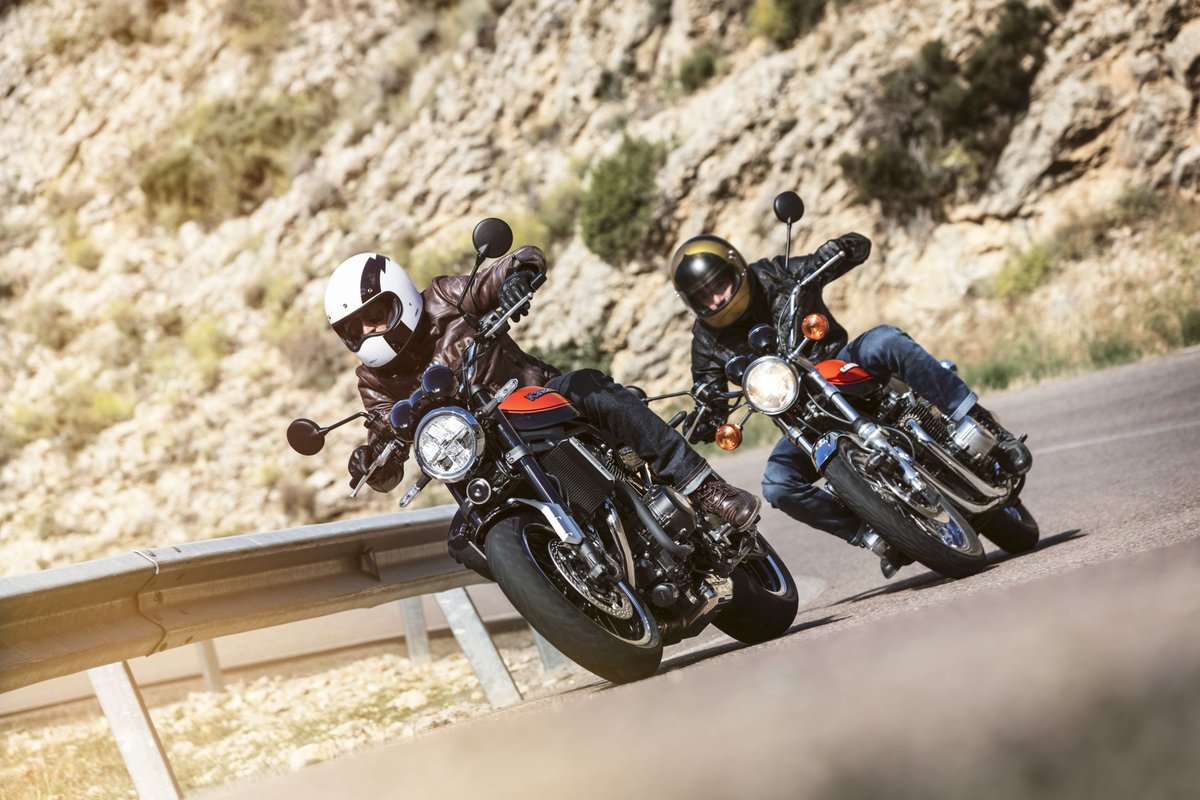
In the twisties, both bikes are genuinely entertaining, but they reward different riding styles. The Z900RS feels like a naked sportbike with retro clothes. The chassis is stiff, the suspension is well-damped, and the Bridgestone Battlax tires offer tenacious grip. You can lean it over until the footpegs scrape, and the engine's top-end power lets you carry corner speed. The Speed Twin 1200 is more about torque-on-demand. You can roll on the throttle mid-corner and feel the rear tire hook up, driving you out with authority. The suspension is softer, so the bike wallows a bit under hard braking, but the overall feel is playful and confidence-inspiring. The Speed Twin also has a tighter turning radius, making U-turns easier. For aggressive canyon carving, the Kawasaki edges ahead. For a fun, torquey backroad blast, the Triumph is hard to beat.
Resale Value and 5-Year Ownership Cost Projection
Resale value is a critical factor for many buyers. According to data from NADAguides and Cycle Trader listings, the Kawasaki Z900RS depreciates roughly 20% in the first year and 35% over five years. A 2025 model with 15,000 miles typically sells for around $8,500-$9,000, compared to its $11,999 MSRP. The Triumph Speed Twin 1200 holds value better: first-year depreciation is about 15%, and five-year depreciation hovers around 28%. A 2025 Speed Twin with similar mileage commands $10,500-$11,000, against its $13,995 MSRP. The Triumph's premium brand perception and lower production numbers help maintain pricing.
Ownership costs over five years favor the Kawasaki. The Z900RS requires valve clearance checks every 15,000 miles--a $400-$600 service at a dealer. Oil changes are straightforward and cost about $80. Tires last 8,000-10,000 miles with moderate riding; a set of sport-touring rubber runs $300-$400. Insurance for the Z900RS averages $800-$1,000 per year for a rider with a clean record. Total five-year cost (excluding fuel and financing): approximately $6,500-$7,500.
The Triumph Speed Twin 1200 has higher maintenance costs. Valve checks are due every 12,000 miles and cost $500-$700. The belt-driven cam system is reliable, but parts are more expensive. Oil changes run $100. Tires wear faster due to the torquey engine--expect 7,000-9,000 miles per set. Insurance is higher, averaging $1,000-$1,200 per year. Total five-year cost: approximately $8,000-$9,500. The difference is about $1,500-$2,000 over five years, but the Triumph's stronger resale value narrows the gap. If you plan to sell after three years, the Speed Twin may actually cost less to own overall.
Ultimately, the choice comes down to priorities. The Kawasaki Z900RS delivers more power, better highway comfort, and lower running costs--it's the practical enthusiast's pick. The Triumph Speed Twin 1200 offers superior build quality, more character, and stronger resale value--it's the connoisseur's choice. Both are exceptional retro roadsters, but they serve different riders. Test ride both back-to-back, and the right decision will become obvious.
Choosing the right motorcycle involves more than picking a color you like. Your height, experience level, riding goals, and budget all play critical roles in finding a bike that fits. Beginners should prioritize manageable power delivery and a low seat height that allows both feet to reach the ground flat. Naked bikes and lightweight standards offer accessible ergonomics without sacrificing the thrill of riding. Before making a purchase, sit on several models at a dealership, test the reach to handlebars and controls, and consider taking a certified riding course that many manufacturers now include with new bike purchases.
Riding safety extends far beyond wearing a helmet. Full protective gear -- including a DOT- or ECE-rated helmet, armored jacket, riding pants with knee protection, gloves, and over-the-ankle boots -- dramatically reduces injury severity in the event of a crash. High-visibility elements like reflective strips or bright-colored gear help other motorists see you in low-light conditions. Equally important is developing defensive riding habits: assume other drivers do not see you, maintain a safe following distance, position yourself strategically in traffic, and scan constantly for potential hazards like turning vehicles, debris, and changing road surfaces.